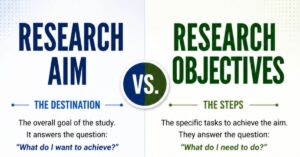
Research objectives and questions work best when you can see them side by side, which is what the four examples below are for. Your objectives explain what the study intends to achieve, while your research questions identify what the study needs to answer.
Below are four examples from different academic fields, each built from the same research topic, so you can see exactly how objectives and questions line up in practice.
What Makes These Research Objectives and Questions Work Together
Each example below follows the same pattern. The objectives use action verbs such as examine, identify, and assess, so a supervisor can see exactly what work the study will do. The questions then restate those same objectives as questions, following the same process covered in how to formulate research questions. Nothing in the questions introduces a new idea the objectives haven’t already covered, and nothing in the objectives gets left unanswered by a matching question.
If you haven’t settled on a topic yet, it’s worth reading how to choose a research topic first, since research objectives and questions only work well when the topic underneath them is specific enough to study.
Example 1: Business & Management
Research Topic:
The Effect of Digital Leadership on Employee Performance in Organisations
Research Objectives:
- To examine the influence of digital leadership on employee performance.
- To identify digital leadership practices used by organisations.
- To assess employees’ perceptions of digital leadership.
Research Questions:
- What is the influence of digital leadership on employee performance?
- What digital leadership practices are used by organisations?
- How do employees perceive digital leadership?
Example 2: Marketing
Research Topic:
The Influence of Social Media Marketing on Consumer Purchase Decisions
Research Objectives:
- To examine the influence of social media marketing on consumer purchase decisions.
- To identify the social media marketing strategies used by businesses.
- To assess consumer responses to social media marketing.
Research Questions:
- What is the influence of social media marketing on consumer purchase decisions?
- What social media marketing strategies are used by businesses?
- How do consumers respond to social media marketing?
Example 3: Education
Research Topic:
The Effect of Online Learning on Academic Performance Among University Students
Research Objectives:
- To examine the effect of online learning on academic performance.
- To identify challenges students experience with online learning.
- To assess students’ perceptions of online learning.
Research Questions:
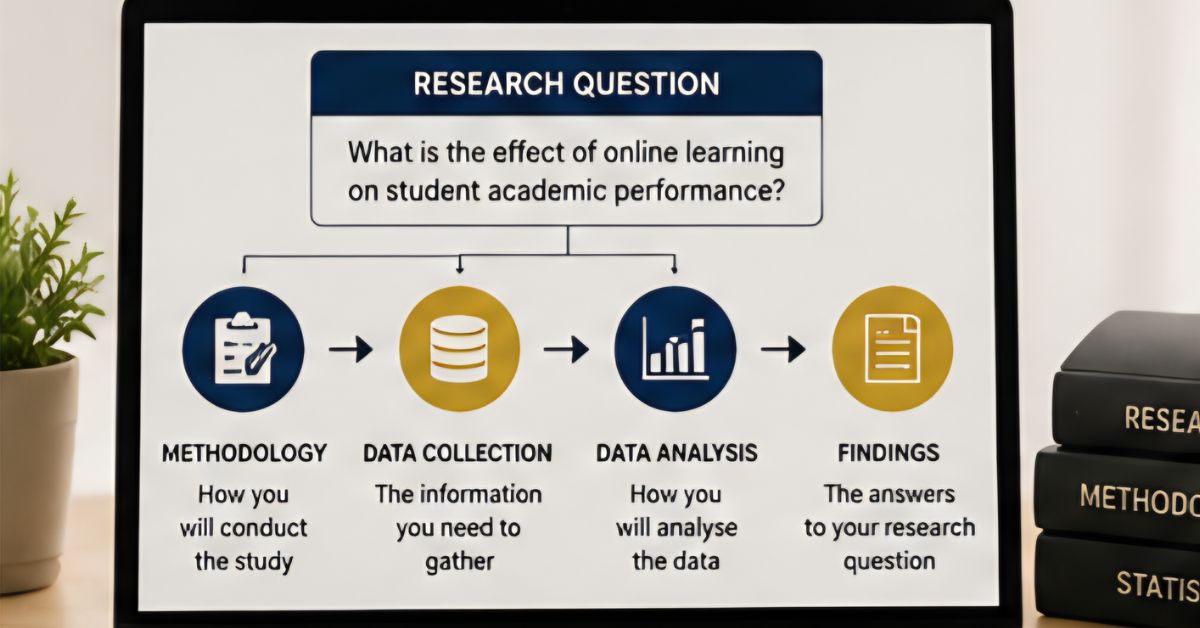
- What is the effect of online learning on academic performance?
- What challenges do students experience with online learning?
- How do students perceive online learning?
Example 4: Information Technology
Research Topic:
The Impact of Artificial Intelligence on Business Decision-Making
Research Objectives:
- To examine the impact of AI on business decision-making.
- To identify the ways businesses use AI in decision-making.
- To assess the benefits and challenges of using AI.
Research Questions:
- What is the impact of AI on business decision-making?
- How do businesses use AI in decision-making?
- What are the benefits and challenges of using AI?
How to Write Your Own Research Objectives and Questions
You won’t use these exact topics, but the structure transfers directly. Start with your own research topic, then write one objective for each major thing you want to find out about it, usually two to four. Turn each objective into a question by restating it as what, how, or why, in the same way the examples above do.
Keep the language specific. “To examine the influence of digital leadership on employee performance” names the exact variable being studied; “to look at leadership” doesn’t. According to Duke University’s library guide to defining a research question, narrowing your topic down to specific themes before you write your questions is what keeps a study focused rather than tackling something too broad. This matters most in the research aim vs objectives distinction: an aim is a general objective, and everything else is a specific one.
Once your draft research objectives and questions are down, it’s worth checking them against the common mistakes students make when writing research objectives, since most weak objectives fail for the same handful of reasons.
A Simple Rule to Remember
Your research objectives and questions should correspond with each other. Each objective should have a related question, and together they should address the main research problem.
This same rule is what makes research objectives and questions useful throughout the rest of a study, not just at the proposal stage. For more on how they carry through into your methodology and analysis chapters, see how research questions guide your entire study.